Clarity is not created by adding
more tools.
Most operational challenges are not caused by lack of effort,
but by lack of structure in how work flows across the business.

— 01 — Growth
Growth increases complexity faster than clarity
As businesses scale, teams expand and processes evolve. But clarity does not grow at the same pace.
This gap is where inefficiencies begin — not from failure, but from the natural friction of expanding systems without structural rhythm.
Y1
Y2
Y3
Y4
Y5
Structure
First
— 02 — Tools
Tools do not solve structural problems
Organizations often introduce new tools to manage complexity.
Without defined workflows, tools create fragmentation instead of clarity.
Structure precedes software. Always.
— 03 — Visibility
Visibility changes how decisions are made
When operations are visible, decisions become faster and more confident.
Without visibility, decisions rely on updates, assumptions, and follow-ups — compounding delay at every layer.
— 04 — Execution
Execution improves when flow is defined
Work moves better when there is a clear path — from initiation to completion.
Defined flow reduces delays and improves consistency across every team, every project, every handoff.
— 05 — Scale
Scalable business are structured businesses
Growth without structure creates complexity. Structure enables consistency, predictability, and control.
The most resilient organizations are not the fastest — they are the most structured.
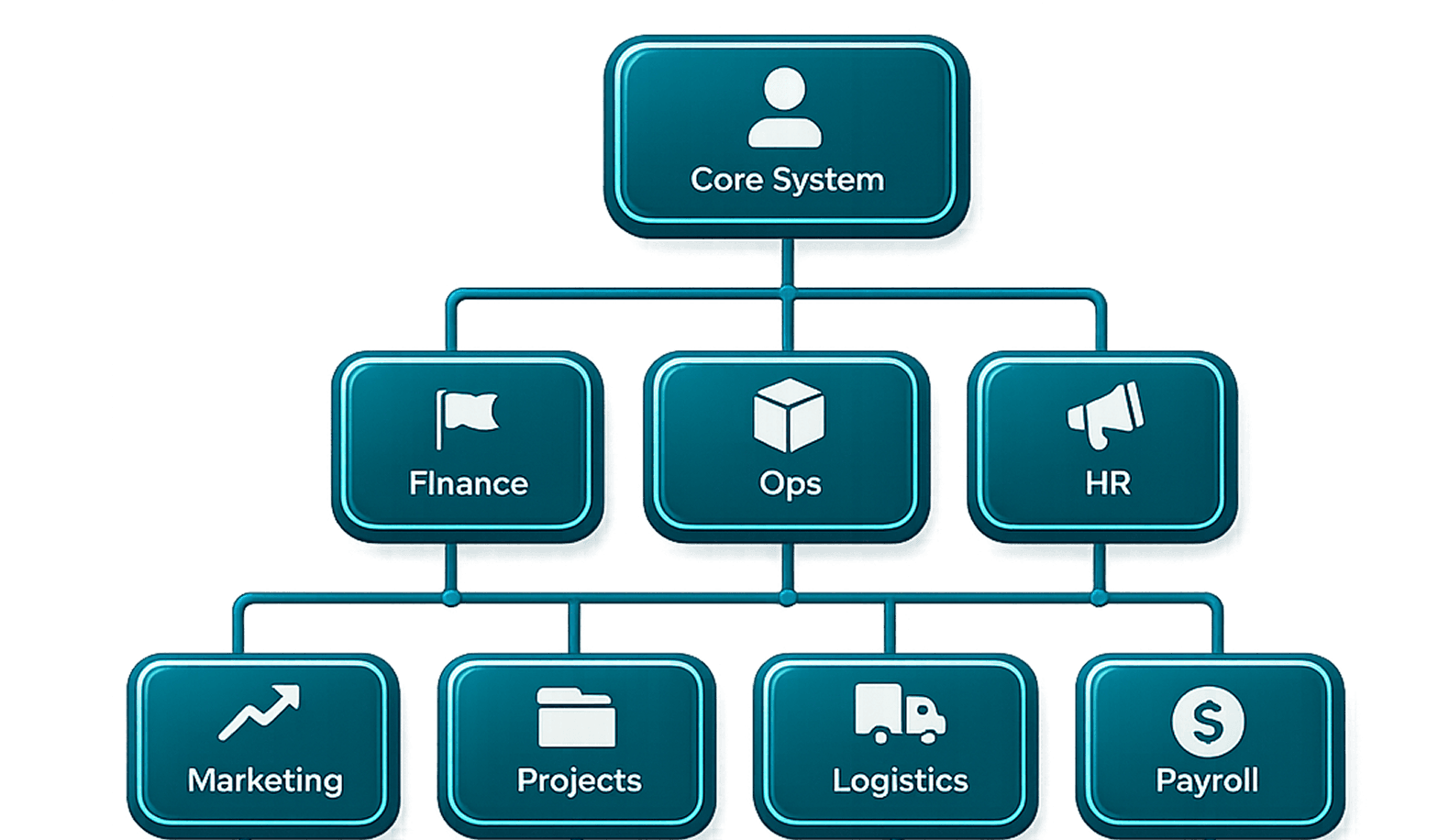

Bring clarity into how your business operates
Clarity begins with seeing how work currently moves across your business. From there, structure can be introduced where it matters.