How we transform operations
into structured systems
As businesses grow, workflows become more complex and coordination increases across teams. We help establish a clear operating model that improves visibility, accountability, and consistency across everyday operations.
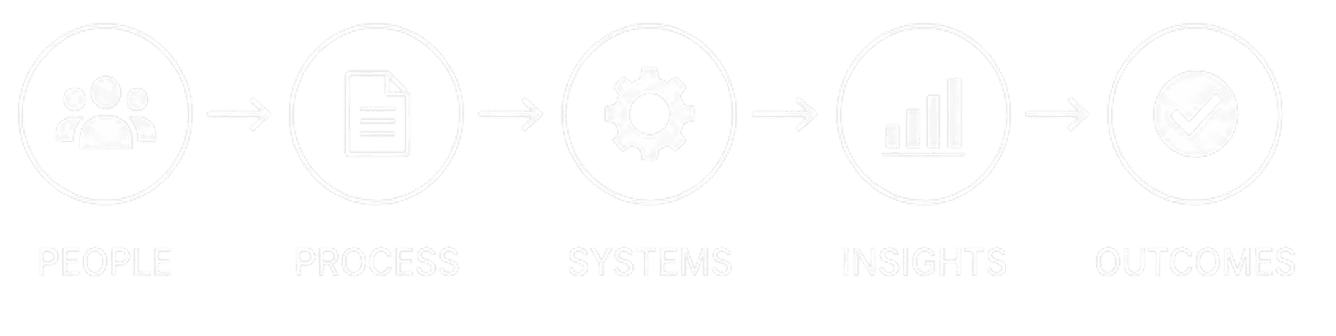
Systems
Integrated and reliable
People
Aligned teams and clear roles
Clarity
Structured design drives outcomes
Objectives
Measurable and focused

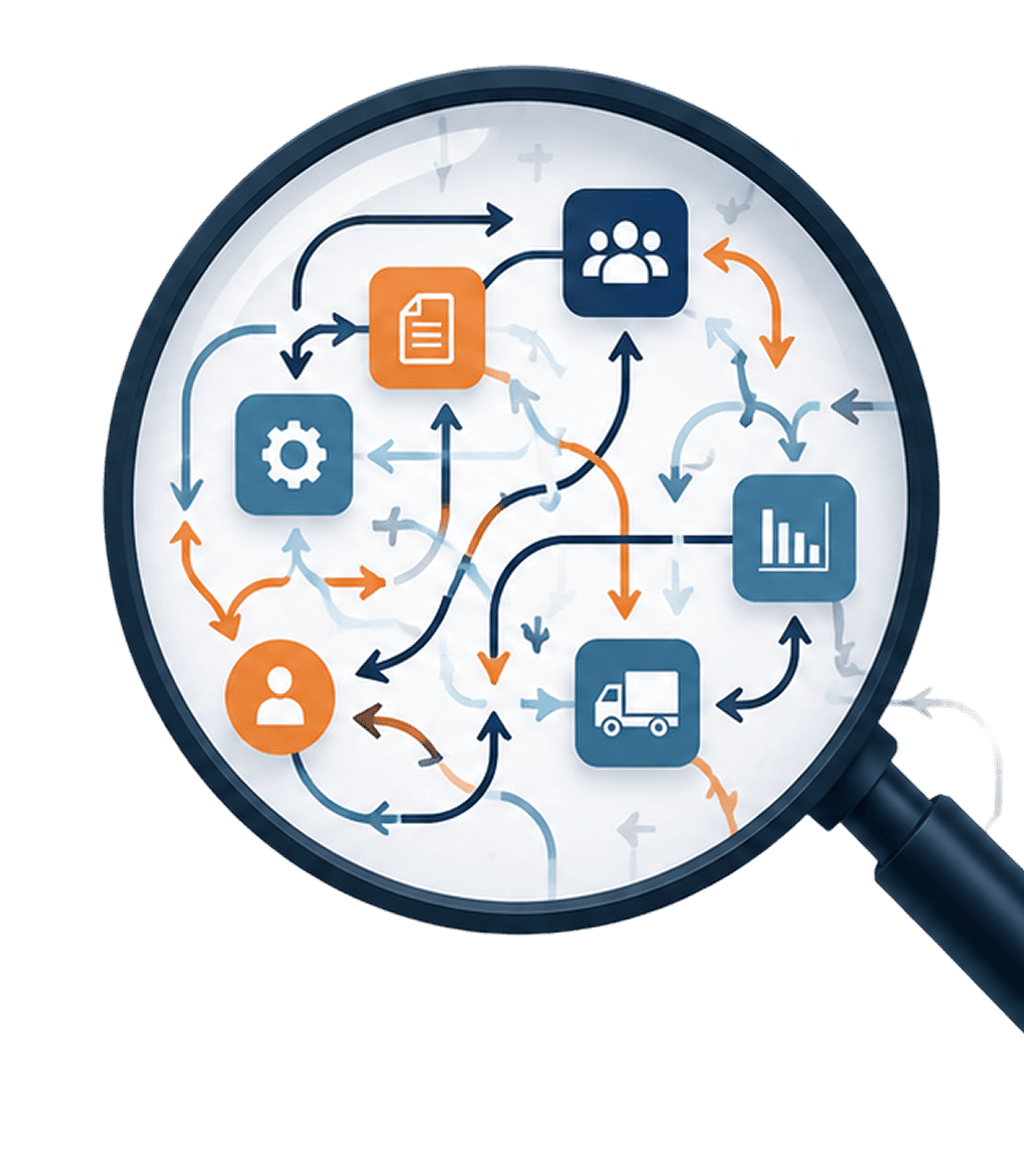
Operational challenges are visible.
The underlying structure is not.
We begin by documenting workflows, responsibilities, decision points, and communication flows.
Work is progressing, but not easily tracked
Activity is happening across teams, yet no one has a reliable view of what is complete, what is in motion, and what has stalled.
Teams are active, but not always aligned
Effort is high, but direction is not consistently shared. Different teams operate from different assumptions about priorities.
Coordination increases as visibility decreases
More meetings, more follow-ups, more check-ins — not because work is increasing, but because structure is absent.
These are not isolated issues.
They indicate the absence of a clear operational structure.
What changes when
structure is introduced
Clarity becomes a property
of the system
A practical framework for
Operational clarity
We work directly with how your business operates today and establish a structure
that supports consistent execution. Each stage focuses on improving
visibility, accountability, alignment, and manageable.
Understand
Map how work currently moves
We analyze how work flows across your business from initiation to completion.
THIS INCLUDES :
- • How work enters the organization
- • How responsibilities are assigned.
- • Where dependencies exist
- • Where delays, bottlenecks, and gaps occur
WHAT THIS ESTABLISHES :

A clear view of how operations function in reality.
Structure
Design a clear operating model
We define how work should move across teams, functions, and responsibilities.
THIS INCLUDES :
- • Clear ownership and accountability
- • Defined workflows and process flows
- • Aligned decision points
- • Consistent ways of working
WHAT THIS ESTABLISHES :

A structured operational model that removes ambiguity.
Connect
Create alignment across people, processes, and systems
We connect workflows, teams, and supporting systems into a unified operational environment.
THIS INCLUDES :
- • Alignment between departments
- • Connected workflows across functions
- • Better information flow
- • Visibility throughout execution
WHAT THIS ESTABLISHES :

A connected environment where work progresses without friction.
Stabilize
Build operational consistency at scale
As your business grows, complexity increases. We ensure the operating structure continues to support reliable execution.
THIS INCLUDES :
- • Maintaining visibility across operations
- • Reducing dependency on individuals
- • Supporting repeatable execution
- • Improving long-term operational stability
WHAT THIS ESTABLISHES :

Operations that remain stable and predictable over time.
Well-defined processes create value only
when they are followed consistently
Many businesses already have processes documented somewhere. The challenge is ensuring those processes are understood, adopted, and followed across day-to-day operations.
Our focus is not only on defining workflows, but on making them practical, visible, and sustainable in real business environments.
Define the structure
Roles, flows, ownership
Assign ownership
Tools, teams, systems
Establish handoffs
Every day, at scale
Standardize execution
Visibility across the business
From Reactive Management to
Operational Control
You move from managing activityto managing operations with clarity.

Start by understanding how your operations function
Operational improvement begins with visibility. Once you understand how work currently moves across your business, opportunities for alignment, efficiency, and scalability become much easier to identify.